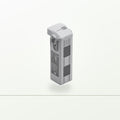
The water run, the boundary, the yards. Checked every day, with nobody driving.
A DJI Dock 3 launches a Matrice 4D on a schedule, flies the route, captures what you asked for, comes home and recharges. The results land on your phone. It flies beyond visual line of sight, so it needs CASA approval before the first mission, and that's the part we deliver with you. Tell us about your site and we'll say within one business day whether it stacks up.
- The CASA approval pathway delivered with you, not left to you
- Sited, installed, commissioned and flight-tested on your property
- Your people trained on the system they'll run, then phone support
- A straight answer up front if your site or use case isn't realistic
Tell us about your site
Two minutes. Where it would sit, what you'd check, how often. We'll come back within one business day.
Every dock system includes
- Approval pathway, deliveredSite safety case, operations manual content and the CASA application, managed with you.
- Commissioned, not courieredSiting, install, network, weather station, every route flight-tested.
- Trained, then supportedYour operators trained on your system. Then we answer the phone.
- Straight answer in one business dayIncluding 'a dock is overkill for this', if that's the truth.
What it does on your place, or your site
Water checked before smoko
Troughs, tanks and dams on a schedule. Same route, same time, every day. Levels and photos on your phone instead of an hour on the drive.
Fences and tracks after weather
A blow overnight? Fly the boundary at first light and know where the damage is before you hook up the trailer.
Eyes on the site after hours
Yards, sheds, depots, solar and water assets. A scheduled patrol with a thermal camera on the Matrice 4TD, where night operation is approved.
The same country, every week
Scheduled runs over the same ground build a dated, comparable record: pasture change, water movement, erosion, revegetation.
A dock flies with nobody watching. That needs CASA approval, and we deliver the pathway with you.
Autonomous dock operation is beyond visual line of sight. Before the first mission, CASA has to approve it: an operator's certificate and a safety case for your site. Most sellers hand you the box and wish you luck. We scope it, write it and lodge it with you, and we tell you before you spend a dollar if your site or use case isn't realistic.
-
Before you spend a dollar
Site and use-case check
Where the dock would sit, what it would fly over, how often, power and internet, what's near by. We tell you if it's realistic, and if it isn't.
-
The paperwork that matters
Safety case and operations manual
The site-specific risk assessment and procedures CASA expects to see for beyond-visual-line-of-sight flying. Written with you, for your site.
-
Lodged with CASA
The BVLOS approval application
Under your operator's certificate, or one we help you set up. We manage the application with you and answer CASA's questions as they come.
-
On site
Siting, install and commissioning
Level pad, power, network, weather station, flight testing of every route. Commissioned, not couriered.
-
First mission
Training, handover and the phone
Your people trained on the system they'll run. Then we answer the phone when something changes on site.
Approval timelines depend on CASA and on how complex your site is. Plan for months, not weeks. The rules move, so the current position should be confirmed with a compliance advisor as part of the process. We won't promise an outcome; we will do the work properly.
A dock is worth quoting if
It isn't, yet, if
Written quote within one business day if it stacks up. A straight answer either way.
What we'll tell you before you buy
A dock is a system purchase, not a gadget. Here's what it actually needs and what it can't do, before you commit.
It needs power and comms
Mains power and a reliable internet connection, or it doesn't fly and it doesn't report. No coverage at the spot you have in mind? Sometimes there's a workable answer, sometimes there isn't. We'll say which.
Weather grounds it, by design
The dock carries its own weather station and holds missions outside the aircraft's limits. A scheduled flight isn't a guaranteed flight. Missed runs fly when it clears.
Night work needs its own approval
After-dark patrols with the thermal Matrice 4TD are not permitted under standard operating conditions. If night is the reason you want it, tell us early so it's scoped into the approval.
It tells you where to look, not everything
It will find the trough that's dry and the mob that's in the wrong paddock. It won't replace eyes on an animal up close. What it replaces is the drive to find out whether you need to.
From enquiry to the first scheduled mission
-
Day 1
You tell us the site
Distances, power, coverage, what you'd check and how often.
-
Within 1 business day
We call you back
A short conversation to confirm the job, the site and where you are with CASA. If it doesn't stack up, we say so.
-
Then
You get a written quote
Hardware, siting, install, commissioning, training and the approval pathway itemised. GST inclusive.
-
Over the following months
Approval, install, first mission
We run the pathway with you and commission on site. Your people are trained on the system they'll run.
Asked every week
Do I need approval to run a dock on my own place?
Yes. Autonomous dock operation is beyond-visual-line-of-sight flying, and that needs CASA approval regardless of whose land it's over. In practice that means an operator's certificate and a site-specific safety case. It's the biggest step in the purchase, and we deliver the pathway with you. Confirm the current position with a compliance advisor as part of the process; the rules move.
How long does approval take?
It depends on CASA and on how complex your site is. Plan for months, not weeks. We can't promise an outcome or a date, and anyone who does is guessing. What we can do is get the paperwork right the first time and answer CASA's questions as they come.
What does the dock need on site?
Mains power, a reliable internet connection and a sensible spot to sit: level, clear of trees and sheds, within range of the country you want covered. We scope all of that with you before we quote.
Can it fly at night?
Not under standard operating conditions. Night operation needs its own CASA approval, so if after-dark patrols are the reason you want a thermal aircraft, tell us early and it gets scoped into the safety case from the start.
What's in the quote?
The whole job: hardware, siting, installation, commissioning, network setup, operator training, ongoing phone support, local servicing and the approval pathway. Itemised, GST inclusive. Equipment finance is available for ABN holders; mention it when you enquire.
Would a hand-flown drone do the job instead?
Often, yes. If a ute and twenty minutes covers your run, or the job is a one-off survey, a Matrice 4E or 4T flown by your own people is the right buy and a fraction of the cost. We'll tell you if that's you.